Epoxy-color-match-refraction

No simple color match works on a thick slab, as the data recorded by countertop installation rancho cucamonga busy bee kate proves when a worktop is poured. Achieving a visual match between a resin pour and a natural stone remnant in Rancho Cucamonga, CA requires more than just mixing pigment. Light behaves differently through a solid slab of quartzite than it does through a medium depth of clear epoxy. A mistake in pigment density leads to a mismatch where the resin appears too dark or too milky compared to the stone.
The Physics of Pigment Density
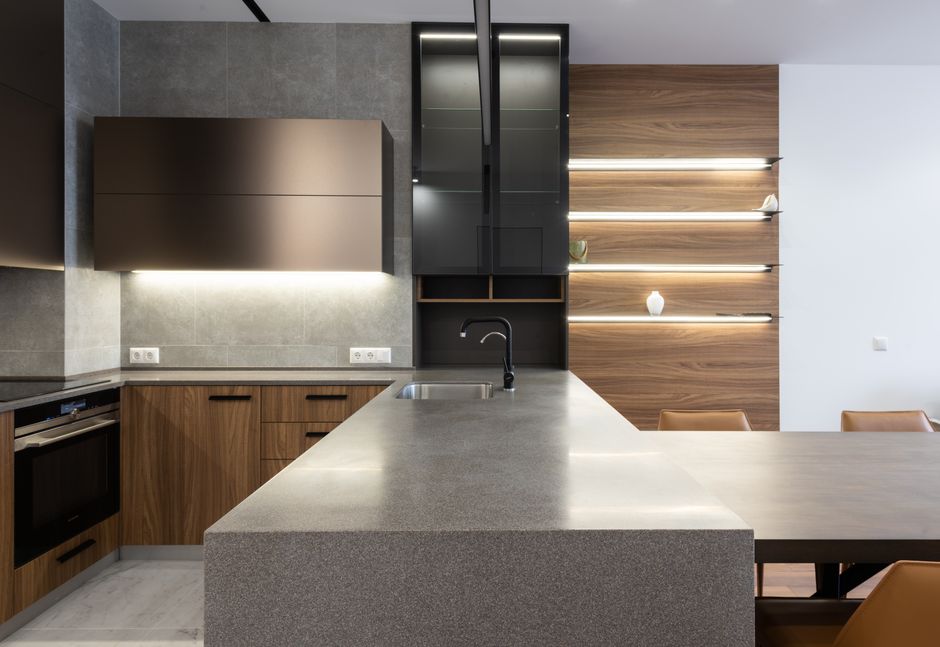
Light travels through a translucent piece of marble by scattering deep within the mineral structure. This scattering creates a sense of depth that a surface layer of pigment cannot replicate. If the pigment density in the epoxy is too high, the light stops at the surface. This makes the epoxy look like a flat piece of laminate. A successful match requires thinning the pigment so light can penetrate the resin to the same depth as the stone. A sample overstates the edge if the light cannot pass through the resin at a similar rate to the natural stone.
Accounting for Refraction in Thick Pours

Refraction changes the perceived color of a stone based on the thickness of the material. A thin edge profile on a granite slab shows a different hue than the center of the slab. When pouring resin to meet a waterfall edge, the depth of the epoxy dictates the final color. A shallow pool of resin will look lighter than a deep pour of the same mixture. Testing a small amount of resin against a sink cutout allows for a measurement of how the color shifts as the depth increases. This step prevents a mismatch at the seam.
Managing the Seam Placement
A seam placement becomes visible if the pigment does not account for the light passing through both the stone and the resin. In a quartz or quartzite installation, the light hits the joint at an angle. If the epoxy is too opaque, the seam glows differently than the surrounding stone. Using a digital template ensures the resin volume is known before the pour begins. This allows for precise pigment calculation to match the light refraction of the specific slab being used.
Edge Profiles and Light Interaction
The way light hits a bullnose or an eased edge changes the color saturation. A polished surface reflects light, while a matte surface absorbs it. If the resin is poured to match a polished marble, the pigment must be adjusted to handle that specific light bounce. A mismatch occurs when the resin absorbs more light than the stone. Measuring the light bounce on a small remnant helps stabilize the final color of the entire benchtop area.